Connectivity, community and context: Why neighbourhoods should use existing links to thrive
22.06.26 4 min read
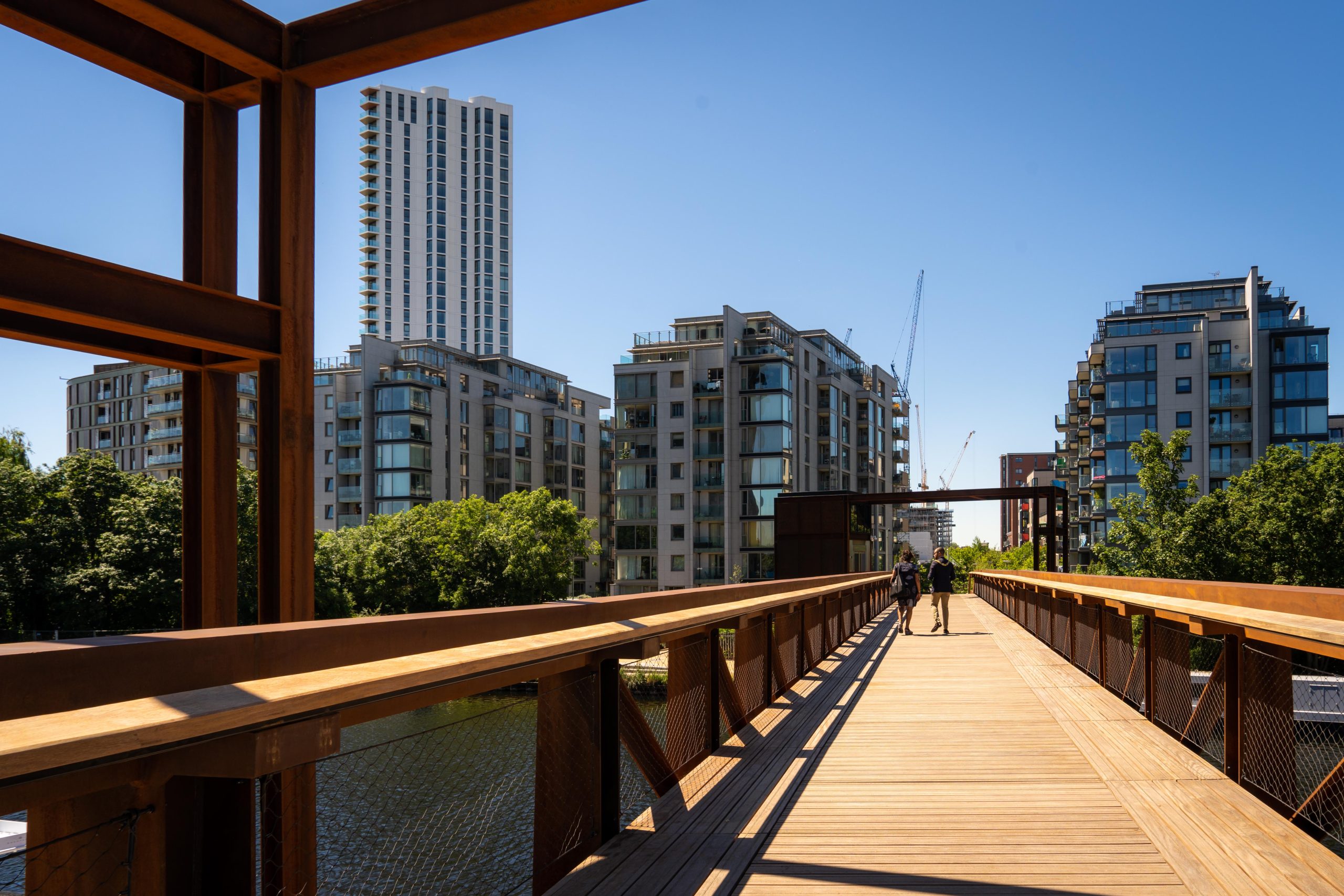
Connectivity is the foundation of good placemaking.
When it comes to urban placemaking, what matters is whether people can move freely, safely and sustainably between where they live, work and spend their time. Developments that are able to effectively build on what’s already there, from historic routes and established transport links, to existing communities and heritage assets, can strengthen communities and drive lasting growth.
At Muse, connectivity shapes every aspect of how we approach regeneration. Walkable streets, active travel routes and strong public transport links are built into our vision from day one. Our work across London, Bristol and beyond has delivered places that are integrated into both the local community and the wider city.
Connectivity and community
Connectivity is not only about linking a neighbourhood to surrounding neighbourhoods and other centres; it is about how local people move within it on a day-to-day basis. Walkable streets, safe cycling routes, well-lit public spaces and new retail spaces all shape whether a place feels safe and animated. When these elements are designed well, they reduce car dependency, support healthier lifestyles and make communities more resilient.
At Stroudley Walk in Bromley-by-Bow, delivered in partnership with Poplar HARCA and the GLA, connectivity – both physical and social – was central to the regeneration of a long-vacant site. A new community hub anchors the neighbourhood’s ground floor, drawing people in and enabling social connection. The reinstated pedestrian route through Botolph Passage also transforms what was once a hostile corridor into a safe and active connection between Bow Road and Bromley-by-Bow stations. Artwork by local schoolchildren lines the route, celebrating Bow’s social and suffragette heritage, meaning the route didn’t just improve connectivity, it became a canvas for the community and an opportunity to reinforce their ownership of the area.
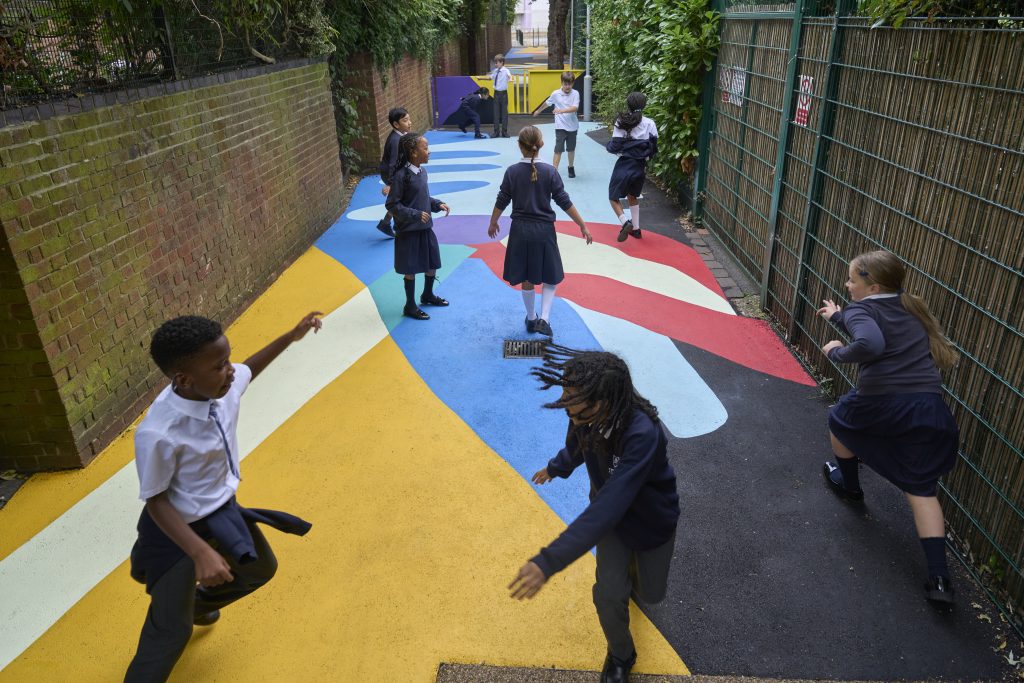
Stroudley Walk, Bromley-by-Bow
Community and context
When it comes to creating connected places, a community’s connection to its history should not be overlooked. Where heritage is lost to unsympathetic development, character is threatened. Investing in listed and historic buildings preserves that sense of place, providing residents with surroundings that reflect where they have come from. At Lambeth Civic Quarter in Brixton, the regeneration of the Grade II listed town hall and the art deco Ivor House delivered 194 new homes, 40% of which were affordable, alongside 120,000 sq ft of civic space. This gave the council, the community and local organisations a shared centre of gravity and reinforced the social infrastructure that connects residents to services, institutions and one another.
Muse’s approach in Brixton reflects a strong commitment to building on the culture and identity a place. Brixton has a rich history of social activism and community organising, and the neighbourhood has been designed to honour those who shaped it. This is reflected in the commemoration of Black Power activist, Darcus Howe, and Olive Morris, the co-founder of the Brixton Black Woman’s group through the naming of buildings and spaces.

Lambeth Civic Quarter
Connectivity and long-term regeneration
Our partnership with Bristol Temple Quarter LLP represents the potential that can be unlocked when connectivity is central to a large-scale regeneration programme.
Bristol Temple Quarter is one of the UK’s largest city centre regeneration schemes, delivering 10,000 new homes, 22,000 jobs, and major improvements to public realm and infrastructure. At its heart sits Bristol Temple Meads, the southwest’s busiest station, which both moves people through the city and draws them in, connecting the wider region to a neighbourhood set to become Bristol’s cultural centre.
Muse’s role is to build on that momentum, ensuring new homes, workplaces and public spaces will enable Bristol to realise its potential as a leading destination for innovation and creativity.
Delivering the kind of connectivity these neighbourhoods require is not something a developer can achieve alone. It demands long-term partnership with local authorities, transport bodies, housing associations and communities to understand local needs. Muse’s partnership model is designed precisely for this. By working alongside public sector partners over periods of 15 to 20 years, we can align development with infrastructure investment, to create places that meet the needs of local communities.
Our work with the Greater London Authority and local boroughs across the capital and with the West of England Combined Authority in Bristol, has reinforced how much connectivity depends on collaborative thinking between stakeholders.
The homes and neighbourhoods that last are those where residents can live sustainably, move freely and stay connected: to each other, to their history and to the wider city around them. That is the standard we set ourselves, and it is what good placemaking demands.