First plans submitted for East Bank Urban Village in Hull
15.04.26 3 min read
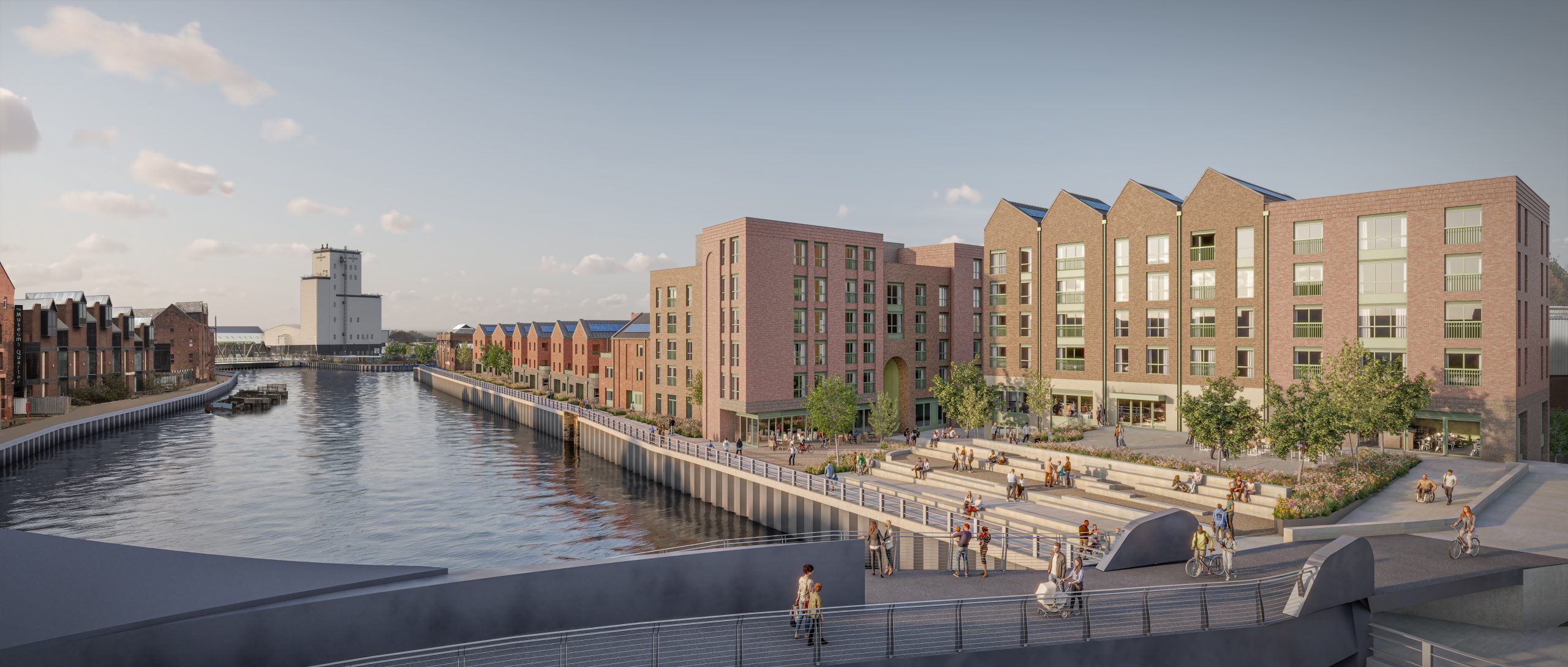
Plans have been submitted for phase one of East Bank Urban Village – one of Hull’s largest ever regeneration projects – which is set to breathe life back into the East Bank of the River Hull through the creation of a sustainable new neighbourhood.
Hull City Council, working in collaboration with lead development partner ECF – our partnership with Homes England and L&G, has submitted detailed designs for phase one of East Bank. The hybrid application also includes outline plans for the wider neighbourhood which, once complete, will deliver around 850 new homes on the site opposite the Old Town.
Once an important part of Hull’s maritime industry, use of this area has seen a significant decline since the mid-20th century. Today, the site is primarily occupied by surface parking and vacant brownfield land.
Over the next 15 years, East Bank Urban Village will introduce a mix of affordable houses and Build-To-Rent (BTR) apartments alongside shops, restaurants, leisure and other neighbourhood uses. An interconnected network of streets, plazas, green spaces and a new riverside promenade will improve connectivity, creating active travel routes that encourage walking and cycling throughout the site.
Phase one will establish the core of the new neighbourhood, delivering 37 townhouses and 78 apartments across two buildings. All of the homes will be affordable, helping to meet local demand and ensuring East Bank is inclusive and accessible to a wide range of people. Phase one will also include the landing for the Scale Lane bridge on the eastern bank of the River Hull and the connection to the existing Trinity Buoy Shed – a much-loved local heritage building – which will be brought back into use as part of the long-term vision for the neighbourhood.
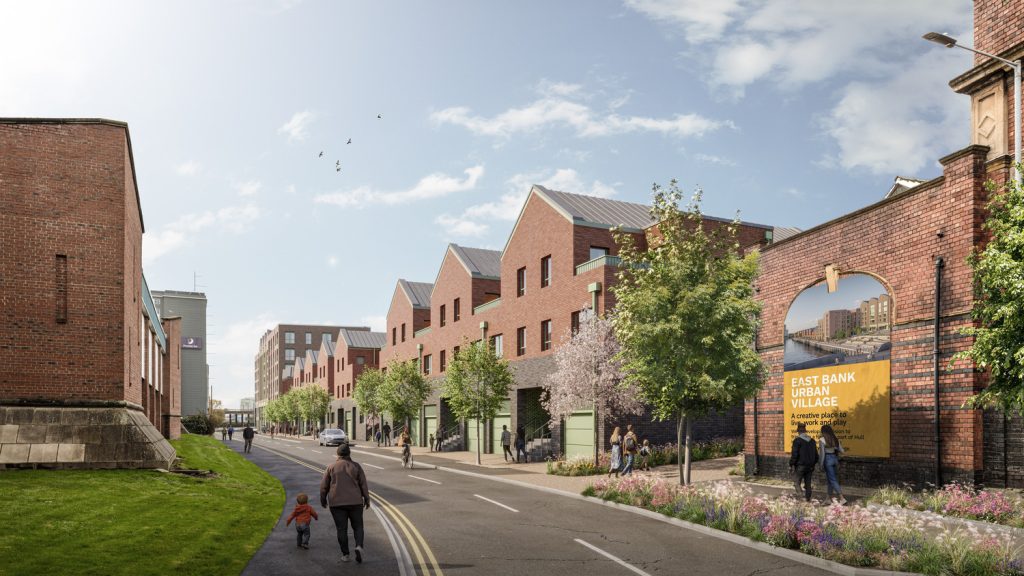
Later phases will deliver more than 700 Build-To-Rent (BTR) and affordable apartments across the wider neighbourhood, improving connections to nearby areas including the Fruit Market. In addition to the new homes, there are plans to revitalise the area around the Drypool Basin, as a contemporary community space.
In September and October 2025, the council and ECF led a series of community conversations, where local people had the opportunity to offer constructive suggestions which fed directly into the masterplan. This included the need for more green community spaces, parking and traffic management, enhancing biodiversity and finding new uses for existing historical landmarks including the former Lock Keeper’s Cottage.
Raife Gale, senior development manager, said:
“The Council has an ambitious programme of regeneration which is already helping transform the city centre, as seen with the recently completed redevelopment of the Museums Quarter and Old Town, and we are using our knowledge and expertise in delivering complex schemes across the UK to help unlock the next phase of the city’s development.”
The project is supported by £9.8m in government-backed Levelling Up Partnership funding, underpinning enabling works and early infrastructure delivery. East Bank Urban Village will also make a significant contribution to the council’s ambition to deliver 2,500 new homes within Hull city centre as part of its Local Plan. It will also act as a catalyst site for Hull’s recently endorsed City Centre Vision.
By using state-of-the-art materials and technologies, including sustainable drainage systems, throughout the neighbourhood, East Bank Urban Village will also follow the principles of Hull’s “Living With Water” project.
Chris Jackson, director of regeneration and partnerships at Hull City Council, said:
“It is pleasing that the council has been able to submit plans for phase one of East Bank Urban Village.
“This is a significant regeneration project which will help to meet the council’s housing targets, revitalise a long-term brownfield site and also support both Hull’s Old Town and city centre economies.
“We have already welcomed extensive public feedback on draft proposals for East Bank ahead of this planning submission and look forward to hearing their thoughts on the updated plans.”
East Bank Urban Village has been selected as a national case study by the UK Real Estate Investment and Infrastructure Forum (UKREiiF) which is held annually in Leeds in May.
The video case study, which is now live, captures how Hull City Council and ECF are working in partnership to accelerate delivery, attract investment and showcase Hull’s broader regeneration strategy to the national market. The project’s inclusion is expected to further boost investor confidence as East Bank moves toward delivery, if planning approval is achieved.
For more information go to www.eastbank-hull.com