Working together, we can make timber construction widespread again
17.01.25 3 min read

Timber construction has been used for hundreds of years. It is sustainable, effective, and attractive. It is only in the relatively recent past that steel and concrete have become the automatic choice for delivery.
Last year, we supported and contributed to the UK’s first Commercial Timber Guidebook.
The initiative – which is also supported by Elliot Wood, Waugh Thistleton Architects, OFR Consultants, and specialist insurance consultants Lignum Risk Partners – aims to promote the use of structural timber in office construction.
It’s a guide which collates best practice and highlights challenges, all gained through genuine and firsthand experience.
In St Helen’s we are designing and promoting a 75,000 sq ft timber frame office. The benefits are already clear to us.
Not only is the building more sustainable, with very low embedded carbon, it is light, airy, and provides an immediate connection to nature. The positive impact of timber on well-being, productivity, and innovation are proven.
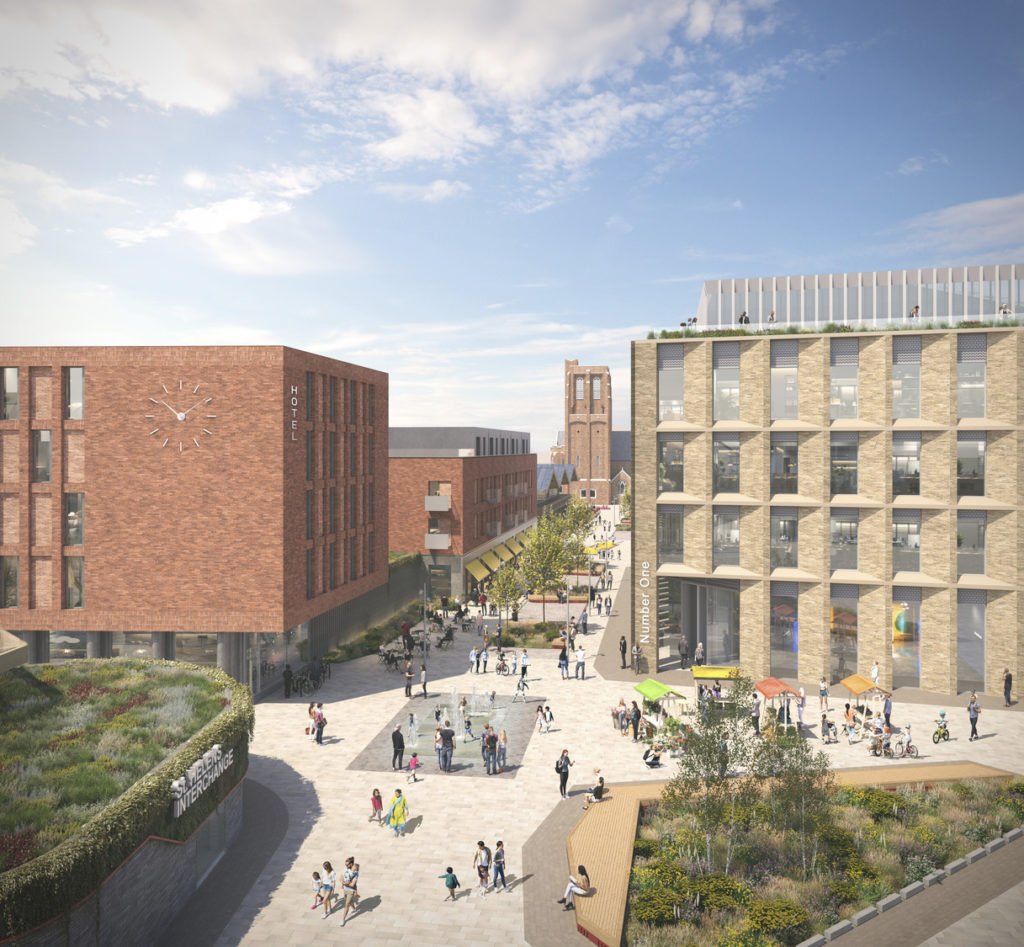
St Helens Town Centre
Critically, we engaged the insurance industry very early in the process to help shape the design. Often, timber buildings can be difficult to insure which either blocks the use of timber or makes buildings unviable for occupiers and investors.
By engaging early, we thought carefully and collaboratively about issues like water damage and fire safety, learning from those who have already delivered. This included the Black and White Building, which is the tallest engineered timber office building in central London.
We identified sustainable forests in Austria and Germany to ensure we could clearly trace our materials and worked with our supply chain partners to develop bespoke approaches to construction and delivery.
Our partners, St Helen’s Borough Council, were supportive of our approach throughout and are highly ambitious for their town.
Part of the wider transformation of the town centre, our approach will deliver a landmark office building which will elevate St Helen’s commercial offer. Like us, the local authority saw it as a once-in-a-generation opportunity.
Of course, delivering using a timber frame approach needs to be appropriate. There is, and will remain, a central role for steel and concrete in construction. However, timber can – and should – be much more widespread, and a real and viable alternative.
As pioneers in urban regeneration, we are always seeking to innovate and push boundaries. Because we deliver over the long-term, we are also able to make bold decisions and work in partnership to find solutions.
The Commercial Timber Guidebook is a way of collaborating across the industry in a way which informs and de-risks the approach for others.
We hope it will inform best practice and provide comfort to the market – particularly the insurance industry – that timber can be used safely and effectively in commercial buildings.